
On June 7, EIT held a ceremony recognizing 33 leading companies as educational partners, advancing the integration of industry and education.
To address the tendency of traditional engineering education to emphasize theory over practice, EIT has established a distinctive three-term academic year. Summer-term practical courses provide paid, credit-bearing industry placements for every undergraduate, beginning in the first year.
Executive Vice President Dongxiao Zhang, a member of the US National Academy of Engineering, attended. Zhongchao Tan, Assistant to the President and Director of the Office of Academic Affairs, and a fellow of the Canadian Academy of Engineering, chaired the ceremony.
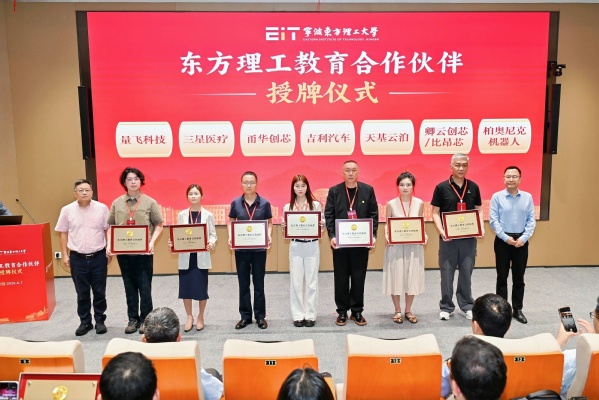
The partners include Geely Auto, Bull Group, Konfoong Materials International, Tuopu Group, Ruijing Semiconductor and other industry leaders, including listed companies, nationally recognized specialized “Little Giant” enterprises and manufacturing champions in specific sectors. Cooperation covers strategic areas such as semiconductors, new energy, biomedicine, advanced equipment, AI and intelligent driving. Their industrial resources, advanced technology platforms and real research settings will support students' practical work, research and professional development.
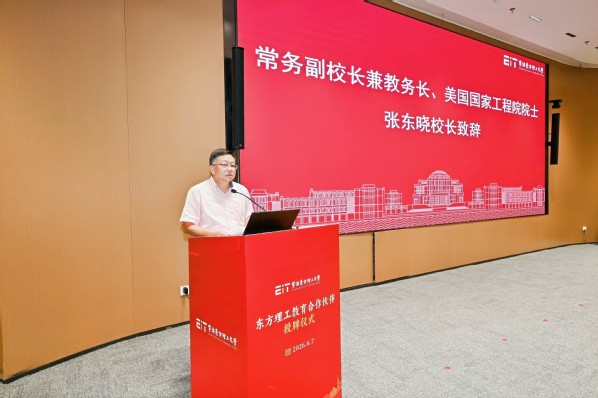
Zhang emphasized that university–industry cooperation must produce substance. Partner companies are strategic allies. Deep collaboration connects educational and industrial needs: university teaching provides strong theoretical foundations while companies offer frontline practice. This improves practical education, brings fresh talent into enterprises and benefits the university, companies and students alike.
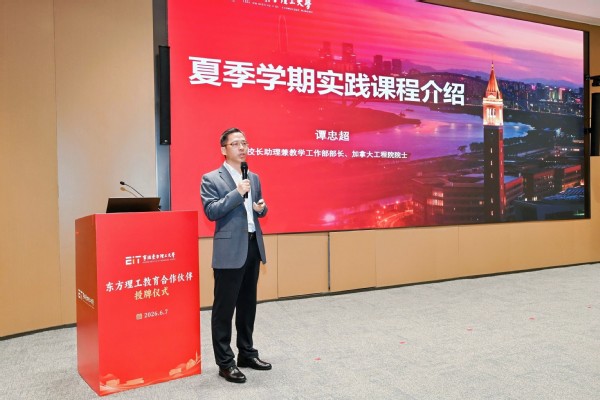
Tan explained the three-term system and dedicated summer placement courses. Unlike the common practice of reserving internships for senior students, EIT offers industry experience in the first year. All 74 first-year undergraduates participated, completing applications, company interviews and pre-placement training. Real workplaces allow students to learn beyond the classroom and develop skills beyond their academic specialties.
Students receive guidance from two mentors: university mentors strengthen theoretical knowledge, while industry experts supervise practical projects. Exposure to industrial, technological and disciplinary frontiers develops students' problem analysis, cross-disciplinary collaboration, communication and innovation-management skills.
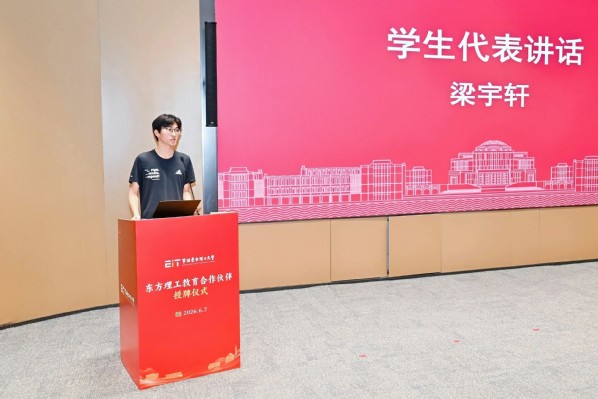
Student representative Yuxuan Liang described his planned AI research placement at Geely's research institute. He aims to turn classroom theory into practical ability, pursue innovation at the AI frontier and develop a commitment to craftsmanship. Speaking for participating students, he pledged to study diligently, work conscientiously and represent EIT well.
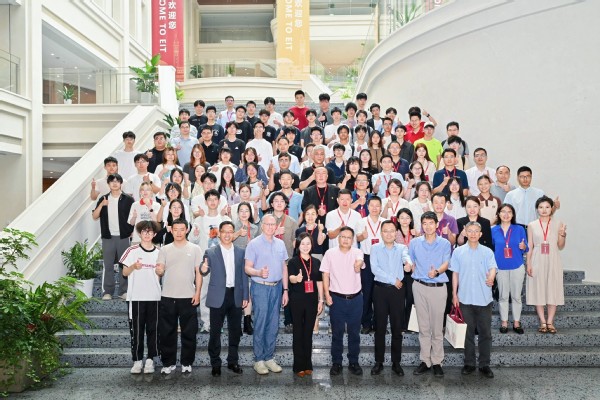
The ceremony marks an important step in EIT's integration of industry and education and the development of its educational model. EIT will continue improving summer placements and connecting theoretical learning, research training and industrial application. Drawing on Ningbo's industrial clusters and national strategic needs, it will deepen university–industry–research collaboration and prepare outstanding innovators. Together with its partners, it will support student development, regional industrial upgrading and national scientific and technological self-reliance.