
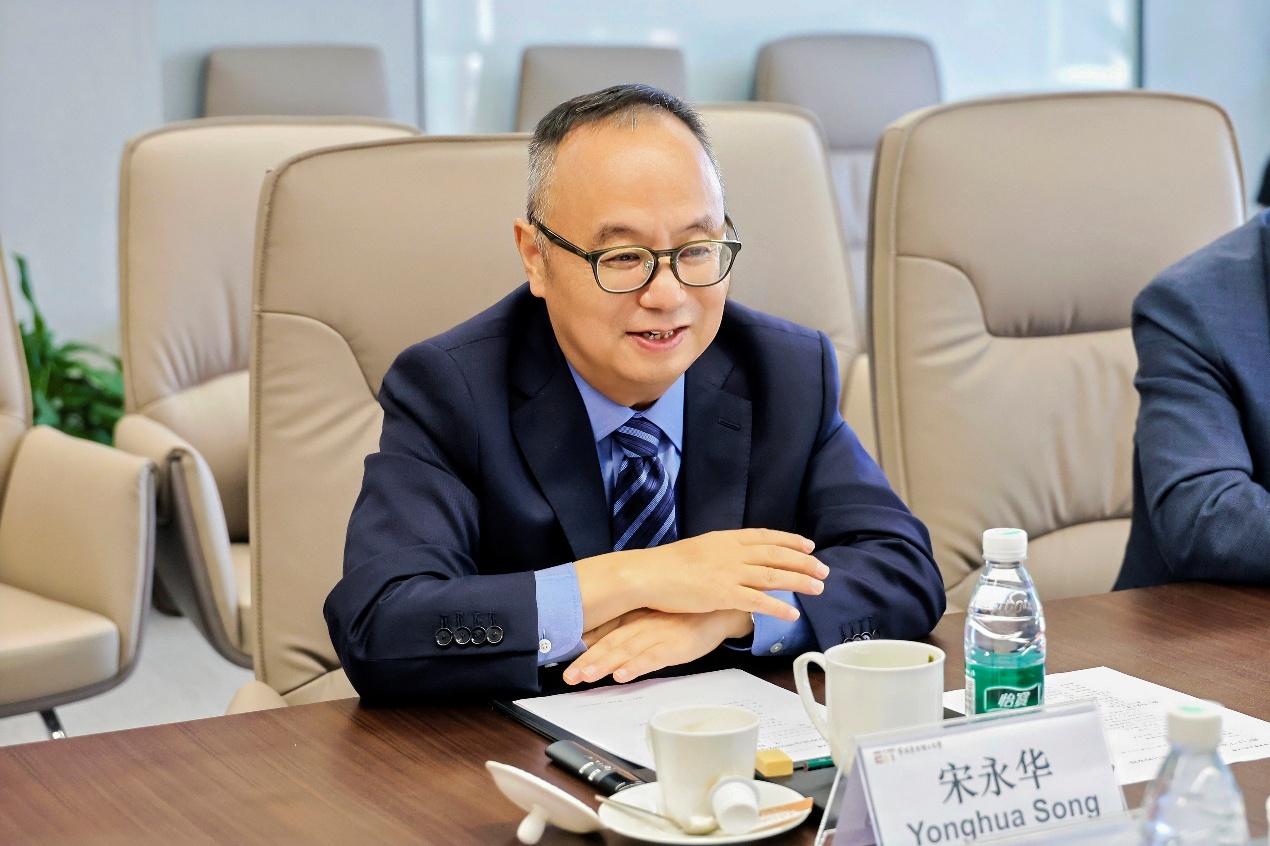
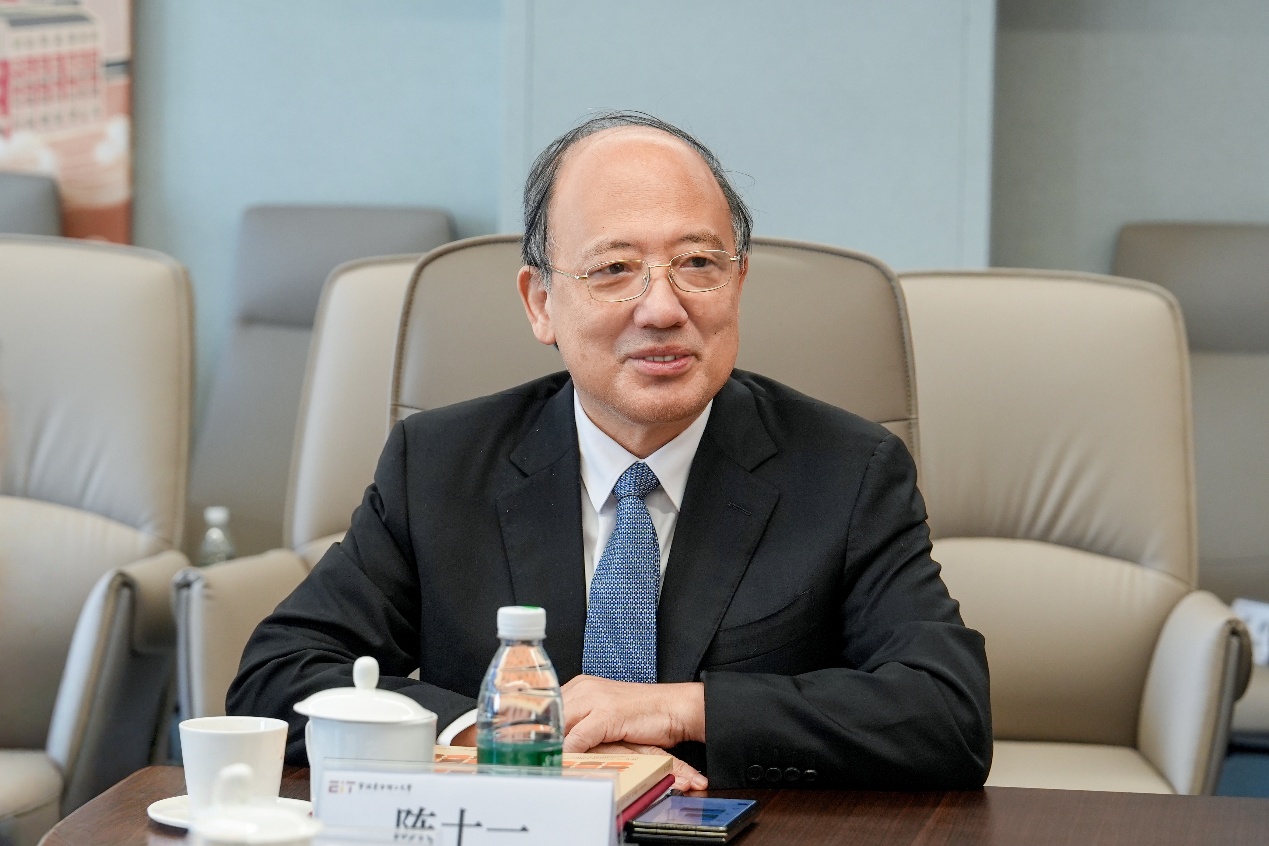
On June 9–10, Yonghua Song, Rector of the University of Macau and a fellow of the Royal Academy of Engineering, led a delegation to EIT. President Shiyi Chen, a member of the Chinese Academy of Sciences, met the visitors. They discussed the development of new research universities, international education, residential colleges, undergraduate education and collaborative research and innovation.
Song thanked Chen for his warm reception. He noted that EIT's exploration of a new research-university model with Chinese characteristics demonstrates strong potential and vitality, particularly in attracting talent and producing research. As a leading Asian university with a comprehensive residential college system, the University of Macau is engaging with the Guangdong–Hong Kong–Macao Greater Bay Area and the Guangdong–Macao In-Depth Cooperation Zone in Hengqin. It is advancing a cross-border, two-campus model, strengthening international education and collaborative innovation, and developing as an international comprehensive research university. The institutions share a commitment to open, diverse and international learning environments.
He hoped the universities would exchange experience in educational philosophy, residential colleges and student mobility, and explore pathways toward high-level research universities.
Chen welcomed the delegation. The University of Macau, he said, serves the development of the Macao Special Administrative Region and uses its location to prepare high-level talent aligned with national needs and Macao's strengths. Its residential colleges, whole-person education and international engagement provide valuable lessons for EIT. As a new research university established by non-governmental initiative, supported by the state and jointly developed by Zhejiang Province and Ningbo, EIT's central mission is to bring together leading faculty, build first-class disciplines, educate outstanding talent and produce high-quality research.
Chen hoped the institutions would draw on innovation resources in the Greater Bay Area and Yangtze River Delta to strengthen cooperation in AI, integrated circuits, intelligent manufacturing and advanced materials, share research resources, exchange high-level talent and advance cross-regional research collaboration, contributing to national innovation and high-quality higher education.
Executive Vice President and Provost Dongxiao Zhang, a member of the US National Academy of Engineering, outlined EIT's mission, disciplinary structure and international development. Associate Vice President and Division of Science Head Zongwei Cai and Division of Engineering Head Ming Zhou, a member of the US National Academy of Engineering, joined the meeting. Chuanwu Xi, Vice Provost and Director of the Office of Global Engagement, chaired the discussion.
The delegation also toured the campus and all-solid-state battery laboratory to learn about EIT's disciplines and research platforms.